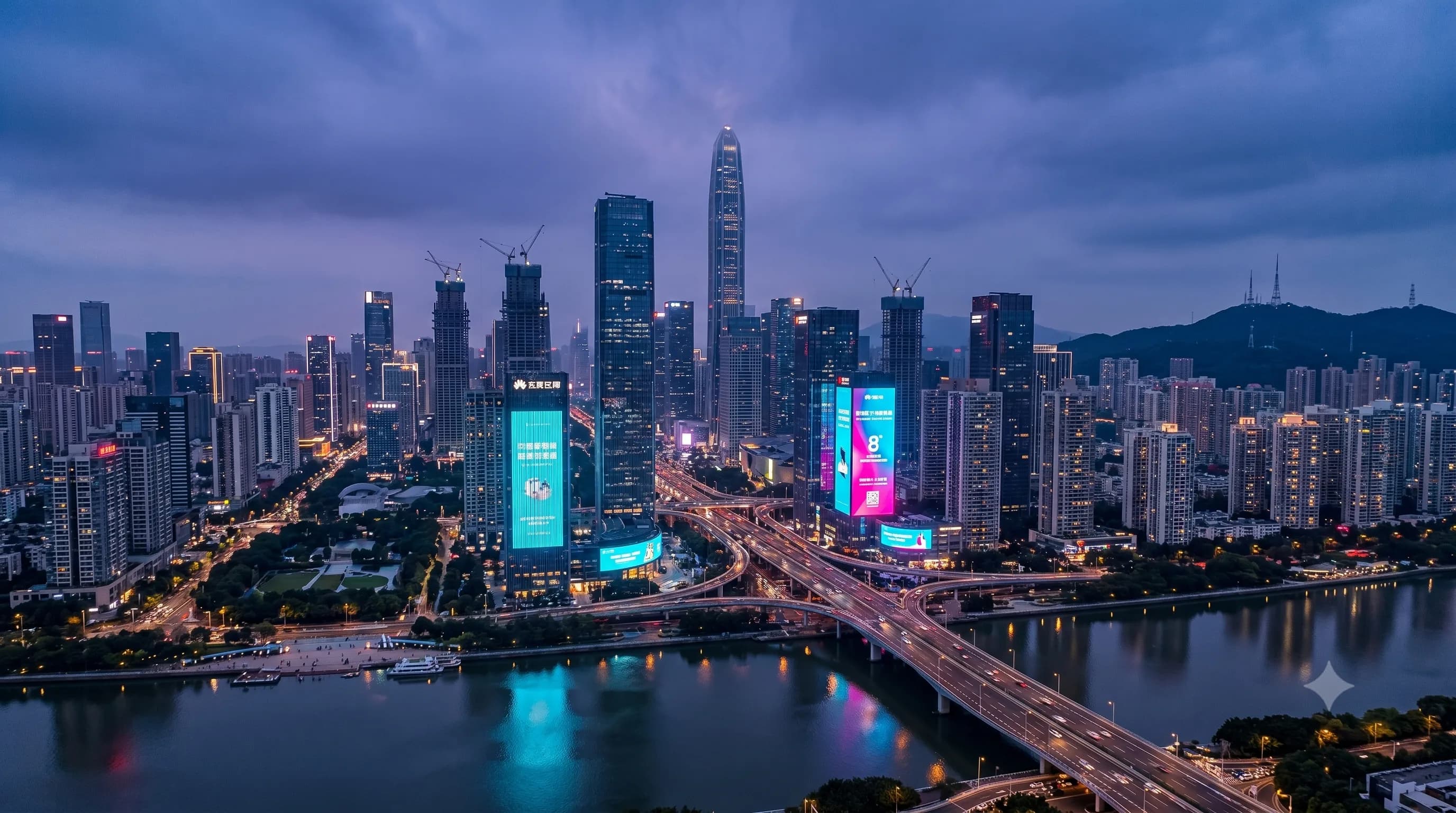
Pudong is Shanghai’s front door for finance and trade. The district brings capital, logistics, and high-tech industry into one place and uses FTZ rules to make investing and cross-border movement simpler. In 2023, Shanghai attracted about $24B in FDI, with Pudong taking a large share. Between 1990 and 2020, it accumulated roughly $103B in FDI and now hosts about 36,200 foreign firms from nearly 170 countries.
Scale and trade The local economy widened fast: GDP went from about $12.2B in 2000 to roughly $70B in 2010 and about $240B in 2023, lifting Pudong’s share of China’s GDP from around 0.76% to about 1.35%. Services lead the mix while advanced manufacturing deepened around them.
On the trade side, the district recorded about $181.8B in foreign trade in the first half of 2023, including $68.5B in exports, up roughly 25.5% year on year. The export basket leaned toward integrated circuits, biomedicine, AI equipment, and NEVs.
Throughput holds up because Pudong is tied directly to Shanghai Port (over $300B in exports in 2023) and Pudong International Airport (about 3.44M tons of air cargo, third worldwide in 2023).
How the FTZ changed the setup
Since 2013, the Shanghai FTZ has cut setup and movement times with specific fixes. Business license approvals on the FTZ one-stop platform were reduced from three working days to one; companies can get the license, company seals, and invoices the same day after approval.
For foreign-investment projects that require filing (i.e., not on the negative list), the FTZ issues a filing opinion within 10 working days of receiving materials.On the trade side, the city’s International Trade Single Window cuts goods declaration time from one day to 30 minutes and vessel declaration from two days to two hours, and lifts overall operating efficiency by about 50% for trade and logistics firms.
Yangshan Port
At the port, Yangshan’s expedited model (green channels and pre-clearance) has eliminated some customs declarations and reduced clearance times by ~70%, which shows up directly in ship-to-gate speed.The FTZ also runs cross-border data service centers to help firms comply with the data outbound negative list, screening materials and speeding filings before data can legally move overseas.
Where firms and labs concentrate Those rules pulled decision-makers and researchers into the same districts. Pudong has about 398 multinational regional headquarters, roughly 47% of Shanghai’s total, and around 256 foreign-invested R&D centers.
Lujiazui anchors finance and professional services, while Zhangjiang anchors semiconductors, biotech, and AI.
Zhangjiang alone hosts more than 20,000 companies and over 1,700 R&D institutions. The district is targeting more than 10% annual growth in R&D spending through 2025 and invested about $14.5B in science and technology projects in 2023.
Industry upgrades, people, and land
Manufacturing output reached roughly $174.6B in 2021, with autos at about $51.6B, and the integrated-circuit industry grew by about 29% in 2024. Financial services grew by roughly 8.8% in 2024, and high-tech services now account for around 51% of service revenue.
Growth needed space and talent, so population rose from about 2.0M in 1990 to about 5.6M in 2023, and the land area expanded from 350 km² to roughly 1,210 km², making room for headquarters districts, labs, and bonded logistics parks.
Bottom line Pudong works because procedures lead: approvals are short, capital rules are clear, and customs clearance is fast. Headquarters are located alongside research facilities, the port, and the airport, so decisions convert into production and shipment with minimal delay. That alignment of rules and geography is visible in the GDP gains and sustained trade volumes. If the goal is a finance-trade engine, establish FTZ-grade processes and place core teams where goods and data can move quickly.
In 1980, Hong Kong’s economy was about $28.9 billion. Shenzhen next door was about $38 million. Forty years later, Shenzhen had grown to a $500 billion economy.
Most of Shenzhen’s early foreign investment came from Hong Kong. Investors used Hong Kong’s capital markets, banks, and ports to finance and ship production from the new SEZ into global markets.
China’s 1979 Joint Ventures Law and early SEZ rules gave foreign firms equity control, legal protection, and targeted tax and tariff relief inside Shenzhen. That combination turned a very small local economy into a front door for international capital.
Scale in numbers
Shenzhen’s GDP rose from about $38 million in 1980 to roughly $480 billion in 2023.
In 2023, Shenzhen’s total imports and exports reached about $544 billion, with exports around $346 billion.
Electromechanical goods accounted for 72.6% of exports, worth roughly $250 billion. These include phones, components, telecom equipment, drones, EV hardware, and other electronics.
Shenzhen produces around 90% of the world’s consumer electronics, including phones, components, and other devices.
By 2023, services generated about $300 billion of output and industry around $180 billion, so services now contribute roughly 62% of GDP while industry remains a large base.
Strategic emerging industries, including advanced electronics, software, new energy, and biotech, produced about $200 billion, or roughly 42% of the city’s GDP..
Operating rules that mattered
Shenzhen let foreign and domestic investors own factories outright or through joint ventures, share profits, and repatriate earnings.
Industrial land was leased long-term at low cost, which turned factory sites into usable collateral for bank lending. SEZ rules allowed duty-free import of machinery and production inputs for export-oriented firms. Local customs offices cleared goods faster than standard ports, shortening the time from shipment to payment.
Administrative procedures were bundled into one-stop registration so firms could set up in days instead of months. In 1988, Shenzhen received provincial-level status, and in the early 1990s, it gained more local legislative power. That let the city adjust tax, land, and licensing rules directly when bottlenecks appeared on the ground.
These rules made projects faster to launch, reduced cash tied up in inventory and customs, and lowered perceived risk for foreign capital.
How clustering played out
Shenzhen’s first dense cluster was electronics and telecom equipment, concentrated in districts like Nanshan and Futian. Contract manufacturers, component suppliers, and assembly plants built up a tightly integrated electronics chain.
From that base, the city expanded into electric vehicles, batteries, industrial robots, and AI hardware. By 2023, electromechanical products alone were roughly $250 billion of exports, just under three-quarters of the total export basket.
Strategic emerging industries produced around $200 billion, or about 42% of GDP, under a “20+8” policy that backs twenty strategic industrial clusters and eight future-oriented sectors like low-altitude aviation and intelligent robotics.
Modern services scaled with these clusters. Finance, logistics, information services, and software together now generate most of the city’s output while still serving the manufacturing base instead of replacing it.
R&D as policy
In 2023, Shenzhen’s R&D spending reached about $30.9 billion, just under 6.5% of city GDP.
China’s national R&D intensity is around 2.4% of GDP, and Hong Kong’s is just over 1%, so Shenzhen is running at almost three times the national level and several times Hong Kong’s level on this metric.
City data describe a “six 90%” pattern where enterprises account for roughly 90% of R&D institutions, funding, and patenting activity. Firms, rather than government or universities, carry most of the research budget and decide where to deploy it.
This spending backs AI, 5G, new energy, and biotech, and keeps prototype-to-shipment cycles short inside the same metro area. Design, testing, sourcing, assembly, and export can often run inside one region, which lowers coordination and logistics costs.
People, land, and urban villages
The original SEZ covered 493 km² across Luohu, Futian, Nanshan, and Yantian. The full municipality is now 1,997 km².
The population rose from around 100,000 in the late 1970s to over 13 million in the metro today and around 18 million on some official counts that include non-registered residents.
Urban villages absorbed much of this growth. They provided low-cost rental rooms near factories and workshops and housed millions of migrant workers, now described as having capacity for “tens of millions” across the city.
Recent reforms are turning many of these villages into “affordable rental housing” or high-tech parks, but for decades they were the main buffer that made large-scale industrial hiring possible without pricing workers out of the city.
Why this model traveled
Shenzhen’s GDP grew at an average of about 20.7% per year over forty years. By 2019 it handled about US$430 billion in trade, around 10% of China’s foreign trade.
Here are core features:
A trade corridor with an advanced neighbor that supplies capital, managers, and market access
SEZ rules that give foreign and local firms ownership, land security, and faster customs
Urban villages and dense housing that absorb labor at low cost during the build-out
Sustained R&D spending above 6% of GDP, pushing firms into higher-margin segments while keeping the electronics export machine running
Together, these choices turned Shenzhen into a city that produces an estimated 90% of the world’s consumer electronics, runs 3.46 trillion yuan of GDP, and anchors China’s high-tech export base.
Early SEZs reset the rules: corporate income tax in zones at 15% versus a 33% national rate; introduction of foreign ownership; long land leases; duty-free inputs with faster customs; contract employment with performance pay; one-stop registration often in a day; and, by the early 1990s, local law-making power.
Timeline
The 1978 Open Door policy, announced by Deng Xiaoping, authorized market experiments and reopened China to trade and investment. It enabled the 1980 launch of SEZs as the primary test sites to attract foreign capital, expand exports, import technology and management, and decentralize approvals.
In 1980, China launched the first SEZs. Through the late 1980s and early 1990s, institutional autonomy expanded; Shenzhen gained provincial-level status in 1988 and legislative power in 1992, formalizing the zone-as-laboratory model. From the 2000s onward, policy standardized across SEZs and FTZs: tax holidays, streamlined customs, clearer profit repatriation, and sector programs for high-tech and services.
Early reforms (1980s-early 1990s)
Shenzhen, Zhuhai, Shantou, and Xiamen implemented the new rule set and pushed execution: exporters received domestic tax relief and limited domestic-market access on preferential terms; talent policies added housing support, research grants, education assistance, and faster hukou; Shenzhen introduced 24-hour registration and one-stop windows; education–industry links formed in zones such as TEDA with on-site vocational and applied R&D campuses. These moves created bankable rights, faster cash cycles, and a functioning labor market that later scaled nationwide.
Mechanics that changed outcomes
Ownership. Joint ventures and wholly foreign-owned enterprises gave investors control and governance clarity.
Tax. Zone CIT ~15% vs 33% national, with predictable holidays as policy matured.
Land. Long leases created collateralizable site control for factories and parks.
Customs. Duty-free inputs and local autonomy reduced clearance times and cash-cycle length.
Labor. Contract employment, performance pay, and social insurance formalized incentives and protections.
Administration. One-stop registration consolidated permits; setup in days.
Local law-making. Zones issued local rules within national law, enabling fast iteration.
Modern SEZ and FTZ tools (2000s-present)
Free Trade Zones codified and extended the model: standardized tax holidays (e.g., two years tax-free, three years half-rate), simplified customs and stronger cross-border logistics, clearer profit repatriation, sector targeting for R&D, green tech, semiconductors, and digital services, plus improved contract, patent, and dispute-resolution enforcement.
China’s economy grew from $149.5B in 1978 to about $17.8T in 2023. SEZs were the accelerant.
Today, zones account for roughly 22% of GDP, 60% of exports, 45% of FDI, and support about 30 million jobs.
The program began in 1980 with Shenzhen, Zhuhai, Shantou, and Xiamen. Shenzhen moved fastest, from about $0.2B GDP in 1980 to about $2.7B by 1990.
Placement
First four SEZs launched in 1980: Shenzhen, Zhuhai, Shantou, Xiamen.
They sit on the southeast coast next to Hong Kong, Macau, and Taiwan. In 1980: Hong Kong GDP was about $28.86B with ~$5,700 per capita. Taiwan’s economy was about $42.3B. Macau’s was about $1.1B with ~$5,333 per capita. China’s per‑capita GDP was about $309. The gap supplied capital, management skill, and trusted trade routes.
Shenzhen captured the largest spillovers from Hong Kong and moved first.
Mechanics
Time: one‑stop shops and fast customs. Registration in days.
Capital: foreign ownership and clear profit repatriation.
Land: long leases usable as collateral for buildout.
Labor: contract employment and performance pay.
Why it worked
Placement cut friction. Policy cut time. Firms could import inputs, produce, and export at speed. Shenzhen scaled into a tech export base. Pudong became a finance and trade engine. Other zones specialized around logistics and neighbors.
Takeaway
Approve in days. Build on proven corridors. Publish clear rules. That is the operating system.
ARISE Integrated Industrial Platforms (IIP) was founded by Gagan Gupta in 2010, and backed by Africa Finance Corporation, Afreximbank’s FEDA, Equitane/ATIF and Vision Invest. With more than US$1 billion in equity and US$2 billion in project finance mobilized, it has grown into Africa’s leading industrial zone operator, designing, financing, building, and managing platforms that shift raw commodities into value-added manufacturing.
Gagan Gupta, Founder and CEO of Arise IIP
It runs major zones in Gabon (Nkok), Togo (PIA), and Benin (Glo-Djigbé), hosting over 400 companies across 47 sectors, mobilizing US$7 billion in investment, and creating more than 50,000 jobs to date. New platforms are underway in Côte d’Ivoire, DRC, Rwanda, Sierra Leone, Republic of Congo, Chad, Malawi, and Nigeria, with the African Development Bank recently committing US$100 million in equity to accelerate this continental rollout.
Now Ghana wants in. The country’s $4 billion 24-Hour Economy is backed by $300-400 million in state seed capital and about $2 billion in private commitments. It is built on eight sub-programmes covering agriculture, manufacturing, infrastructure, finance, tourism, logistics, human capital, and governance. The target is 1.7 million jobs in four years.
The anchor is the Volta Economic Corridor, with 2 million hectares around Lake Volta for agro-industrial parks, logistics, and a floating port. The AfDB is backing corridor design, logistics, and a credit-enhancement facility to mobilize Ghana’s $5.2 billion pension assets. ARISE IIP has pledged $250-300 million for light industrial parks in the Western Region and has formally endorsed the program.
Arise IIP Track Record
ARISE IIP’s flagship zone is the Gabon Special Economic Zone at Nkok, launched in 2010 as its first industrial platform under a public-private partnership with the government of Gabon. It was designed to kickstart local timber processing and broader industrialization. The zone spans 1,126 hectares and combines industrial, commercial, and residential areas. It hosts 144 companies from around 17 countries across 22 industrial sectors, including a core wood-processing cluster.
Nkok has created approximately 20,000 direct and indirect jobs and attracted €740 million in foreign direct investment, totaling €1.6 billion in foreign capital mobilized. In 2022 alone, the zone processed around 1 million cubic metres of timber and exported goods worth €272 million in 2021. Its logistics infrastructure handled 23,297 TEUs in 2023. It also holds the distinction of being Africa’s first carbon‑neutral industrial zone under ISO 14064‑1.
ARISE IIP’s second major zone is the Plateforme Industrielle d’Adétikopé outside Lomé, launched in 2021 as a public-private partnership with the Republic of Togo. Phase 1 covers about 130 hectares within a 410-hectare footprint, with a dry port that can hold 12,500 containers and parking for roughly 700 trucks. The site sits about 15 km north of Lomé and integrates industrial, commercial, storage, and logistics functions.
By January 2025, the zone hosted about 20 companies across textiles, agri-processing, and pharmaceuticals, with several already operating. Reported job creation passed 3,000 by late 2022, with fresh recruitment rounds in 2025 for 600 textile workers and a stated plan to generate about 5,000 jobs in 2025.
Since launch, investment has exceeded €150 million, including about US$77 million in foreign direct investment. The zone has generated US$155 million in revenues and paid around €8.8 million in taxes between 2021 and 2023. Separate Afreximbank project materials cite total capex for the zone at roughly CFA 130 billion in Phase 1. In 2023, the government established a single-window clearance at PIA’s dry port to simplify permits and processing.
The Glo-Djigbé Industrial Zone (GDIZ) in Benin, launched in 2021 as ARISE IIP’s third platform through a PPP with the state, spans 1,640 hectares and is being developed in three phases. By late 2023, about 400 hectares had already been built out with 36 active investors. Twelve operational units have created over 10,000 jobs, expected to rise to 14,000 by the end of 2024.
Phase 1 secured US$1.4 billion in investment, including more than US$1 billion in FDI, and has generated about US$1.9 billion in revenues to date. The zone is projected to create 300,000 jobs by 2030, with roughly 100k in agro-processing and 200-250k in textiles. Current activity spans cashew and soy processing, ceramics, electronics assembly, pharmaceuticals, and an expanding textile base.
One integrated textile unit under testing will process 20,000 tonnes of cotton fibre and employ about 5,000 people. Outputs already include more than 600k Made-in-Benin garments exported to The Children’s Place and 12,000 military uniforms delivered locally, with new partnerships underway with brands such as KIABI.
Congo’s Kin‑Malebo Industrial Zone (CIP), launched in September 2022 via a framework agreement between ARISE IIP (60%) and the DRC government (40%), marks the group’s fourth platform. Phase 1 covers 514 hectares; ARISE has committed US $200 million, targeting up to 20,000 direct and indirect jobs. The zone, situated 40 km from Kinshasa and 10 km from the international airport, plans to attract roughly US $850 million in multi-sectoral investment, focusing on wood and poultry processing, beverages, pharmaceuticals, plastics recycling, household appliances, and electric vehicles.
Congo Industrial Platforms – Master Plan of Kin Malebo
Several ARISE IIP zones remain under development. In Nigeria, the Remo Free Zone in Ogun State is a 45-year PPP covering more than 5,000 hectares. ARISE has committed US$400 million for Phase 1 on 423 hectares, due for completion by December 2026, with 40,000 direct jobs targeted. Six firms have already secured land, and two are expected to begin operations in mid-2025. In Rwanda, the Bugesera SEZ is being built under a 60/40 PPP with the government, covering 330 hectares near the new airport. Backed by US$100 million, it will focus on timber, packaging, agro-processing, construction materials, and logistics, with operations planned three years after construction began.
In Sierra Leone, the SIZ-Koya project launched in May 2023 with ARISE investing US$120 million in a first phase of 150 hectares, attracting US$165 million in FDI and aiming for 2,500 jobs, rising to 6,500 in Phase 2 on 350 hectares. Côte d’Ivoire’s PEIA, agreed in June 2022, began operations in January 2024 on 444-500 hectares, targeting agro-processing, pharmaceuticals, construction materials, and logistics. Malawi’s Magwero Industrial Park, launched in June 2024 under a 65/35 PPP with the state’s Export Development Fund, spans 417 hectares with US$300 million from Afreximbank and will host agro-processing (soy, cotton, maize, peanuts), glass, construction materials, LED lighting, and paper production.
Conclusion
Over the past decade ARISE IIP zones have mobilized more than US$7 billion in investment, attracted 400+ companies across 47 sectors, and created over 50,000 jobs. Gabon’s Nkok zone has drawn €1.6 billion in FDI and processes over 1 million m³ of timber annually. Togo’s Adétikopé platform has secured €150 million in investment, US$77 million in FDI, generated US$155 million in revenue, and created 3,200 jobs with thousands more in the pipeline. Benin’s Glo-Djigbé zone has brought in US$1.4 billion in its first phase, produced nearly US$1.9 billion in revenues, and is on track for 300,000 jobs by 2030.
Against that track record, Ghana’s target stands out. The government is aiming for 1.7 million jobs in just four years, nearly six times Benin’s long-term target, compressed into a fraction of the time. With US$4 billion in planned investment, AfDB backing, and ARISE committing US$250-300 million for light industrial parks, the ambition is clear. To reach it, Ghana must secure land, deliver reliable energy, expand port and corridor capacity, enforce efficient permitting, and stick to project timelines. Without that, the 24-Hour Economy risks going the way of earlier stalled industrial plans.
Walt Disney World is one of the largest single-site employers in the United States. It directly employs 75,000 people and supports over 263,000 jobs statewide, equal to 12% of Central Florida’s workforce. Orlando’s growth from a mid-sized town to a metropolitan area of 2.5 million rests heavily on this employment base and the wider ecosystem Disney catalyzed.
In 2022, Disney’s Florida operations generated $40.3 billion in economic output—about 4% of the state’s GDP—and $6.6 billion in taxes, including $3.1 billion in state and local revenue.
But most people think “park” when they think of EPCOT, not knowing it started as a city. In October 1966, Walt Disney pitched EPCOT as a 20,000-resident, privately governed city that would “never be completed,” constantly testing new tech and urban systems. The Florida Legislature created the Reedy Creek Improvement District (RCID) in 1967 to give Disney county-level powers to build and run that city—zoning, utilities, roads, taxation, and bonds.
RCID allowed EPCOT to function as a U.S. special economic zone (SEZ) long before the term entered policy discourse.
EPCOT’s Design as a Zone
In October 1966, Walt Disney presented EPCOT as a city of 20,000 residents under private governance. Residents would have no voting rights; Disney would appoint officials and control all municipal functions, mirroring the streamlined, non-democratic governance of SEZs abroad. Disney recruited companies like RCA, Westinghouse, and GE to pilot technologies at EPCOT before global rollout.
RCID gave Disney full county-level powers over its 40-square-mile property: authority to set zoning and building codes, levy taxes, and issue bonds. Disney taxed itself to finance roads, utilities, drainage, and even provisions for an airport and nuclear plant. By 2022, the district had built power and water systems, 179 miles of roads, and 67 miles of waterways, all privately funded. The arrangement saved Orange and Osceola counties roughly $160 million annually in avoided services.
EPCOT’s design anticipated modern SEZ infrastructure: monorails, underground logistics, and transit-first planning. Its industrial park was intended as a permanent R&D showcase. Walt insisted EPCOT “would never be completed,” an ethos that foreshadowed the adaptive governance of Shenzhen and Dubai’s Jebel Ali.
Global SEZ Outcomes
China’s SEZs, launched in 1980, now account for 22% of national GDP, 45% of FDI, 60% of exports, and over 30 million jobs. Shenzhen grew from a fishing village into a global tech hub of 12 million. Dubai’s JAFZA drives $194 billion in non-oil trade, 36% of GDP, and directly employs 160,000, with over 1 million jobs supported economy-wide.
These results came from similar policies Walt Disney had outlined two decades earlier: targeted investment, reduced bureaucracy, and technology integration. The U.S., by contrast, pursued only fragmented zones: Foreign Trade Zones for warehousing and small-scale enterprise zones. No city-scale SEZ was attempted.
Opportunity Zones vs. SEZs
The 2017 Opportunity Zones program designated 8,700 U.S. census tracts for investment through capital gains tax incentives. The outcome has been minimal job creation and poverty reduction.Capital flowed largely into real estate but credible studies find limited effects on jobs, business formation, or poverty because OZs changed tax treatment, not governance or rules. No bespoke codes, no fast-track permitting, no zone authority.
The program lacked the governance and regulatory autonomy that make SEZs effective.
Why U.S. “opportunity zones” underperform: the bureaucracy wall
At the municipal level, parcel-by-parcel zoning, discretionary approvals, impact negotiations, and litigation each add delay and veto points. If the project does scale through these challenges, overlapping permits (water, wetlands, utilities), plus state-level environmental reviews layered on local processes wait at the state level.
The U.S. Federal Government also require environmental impact statements which frequently take 2–4.5 years on median (longer for complex projects), with sequential, not parallel, agency reviews. The U.S. system optimizes for process certainty over speed.
Why EPCOT was Downsized
Walt Disney’s death in December 1966 removed the only person capable of driving EPCOT as a functioning city. The Disney board pivoted to the safer economics of theme parks, opening Magic Kingdom in 1971 and EPCOT Center as a theme park in 1982. EPCOT’s collapse was not caused by regulatory limits—Florida granted Disney extraordinary powers—but by the absence of leadership willing to run a private city.
That’s a standard institutional response: when the founder exits, risk tolerance collapses and organizations monetize what they know. Think Apple post-Jobs: world-class execution and services monetization but far fewer “bet-the-company” product leaps.
Disney post-Walt: reliable park expansions and IP integration but no second attempt at private city-building. Also, Singapore post-LKY and UAE in their mature phase: still dynamic, but the frontier has moved from radical system design to optimization at scale.
RCID’s Rebranding
In 2022, Disney’s opposition to Florida’s “Don’t Say Gay” law prompted Governor Ron DeSantis to target RCID. A law passed to dissolve the district raised concerns over its $1 billion debt and $160 million annual services. The compromise in 2023 rebranded RCID as the Central Florida Tourism Oversight District (CFTOD), with a governor-appointed board.
Despite the political struggle, the district’s core powers—taxation, bond issuance, zoning, infrastructure—remained intact. A 2024 settlement stabilized the arrangement, preserving the special district while shifting governance away from Disney.
Lessons
EPCOT remains the most ambitious SEZ-style development that America never built. Disney’s zone demonstrated the levers—land consolidation, private municipal control, regulatory carve-outs, independent taxation—that later powered Shenzhen and Dubai to generate trillions in GDP and FDI. Its failure as a city demonstrates the importance of strong visionary leaders in bringing these projects to life, like Lee Kuan Yew in Singapore and Rashid bin Saeed Al Maktoum in Dubai.
Had Walt lived into the mid-1980s, the city likely would have launched. A Central Florida EPCOT functioning like a U.S. Shenzhen/Singapore could plausibly have matched or exceeded today’s $40.3B Florida impact (2022) by layering export-oriented industry onto tourism, anchored a logistics/manufacturing cluster akin to JAFZA’s $194B non-oil trade, and lifted metro per-capita productivity—Singapore’s $547B GDP (2024) shows what a well-governed city-state can produce on a small footprint.
Even half of Jebel Ali’s throughput or a fraction of Singapore’s tradables intensity, applied to a 40-sq-mile private-governance city in Central Florida, would have shifted Orlando’s economy from tourism-dominant to diversified, export-earning, and higher-wage. That was the bet EPCOT’s city charter enabled and the one the company abandoned.
For policymakers, the takeaway is clear. The U.S. has missed multiple opportunities to harness SEZs for growth, settling instead for ineffective measures like Opportunity Zones. Take the U.S maritime industry as an example; ASCE’s 2025 Report Card gives the U.S. an overall “C” (the highest ever, up from C- in 2021) and an estimated $9.1T is needed to put all 18 categories into a state of good repair over 2024–2033.
Rwanda’s GDP grew steadily from $122M to $2.55B between 1961 and 1990. Then, it was ravaged by civil war and genocide in 1994, leading to the deaths of 800,000 people and a GDP collapse by 50% in a single year to $753M.
State institutions broke down, and more than two million people fled across borders in the Great Lakes refugee crisis. By the early 2000s, recovery had taken hold with $2.06B in GDP. Since then, the country has delivered one of Africa’s most consistent growth records, averaging around 7-8% GDP growth annually over the past two decades.
The city of Kigali
The momentum has accelerated in recent years. Real GDP grew 8.2% in 2023 and 8.9% in 2024, lifting the economy to $14.2B (constant 2015 USD), up from $10.17B in 2020. In nominal terms, output reached about $14B in 2023, compared with $13.3B in 2022.
Foreign capital has been central to this expansion: FDI inflows jumped from $305M in 2022 to $459M in 2023, with the first half of 2024 alone bringing in $289M, up 63.5% from the year before. These flows concentrated in manufacturing, ICT, logistics, and healthcare, and have translated directly into jobs.
Over 500,000 new jobs were created year-on-year nationwide, while firms with foreign private capital increased their payrolls by 20.3% in 2023, adding more than 10,000 new roles and bringing employment in FPC-backed companies close to 60,000 people.
Kigali’s Role: Engine of Reform and Investment
Kigali is the economic and political core of Rwanda. The city houses about 1.33 million people in 2025, growing at more than 3% annually, and has transformed from a post-genocide town of fewer than 400,000 into one of Africa’s fastest-growing capitals. Today it contributes close to 41% of Rwanda’s GDP and sustains per capita incomes nearly four times the national average ($2,865 vs. $772 in 2017).
City OF Kigali
Tourism and business travel anchor a major share of Kigali’s economy. In 2024, Rwanda earned $647 million from tourism, about 11% of GDP, with Kigali capturing much of that through its hotels, convention facilities, and event venues. The Kigali Convention Centre and the $104M BK Arena have turned the city into a regional hub for conferences and exhibitions, while nearby parks like Akagera generated $4.8M in 2023 alone. Projects like the Kigali Cultural Village are expanding the city’s offerings, adding cultural and creative industries to its tourism portfolio.
Kigali leads in governance and service delivery through Irembo. In 2023-24, over 5M requests were processed online. Civil status applications grew from 683k in 2020 to ~2M in 2024, with 70% completed within an hour. Officer productivity tripled in the same period, from 900 to 3,000 applications each year, lowering transaction costs and improving reliability for residents and investors.
Kigali Special Economic Zone (KSEZ)
The Kigali Special Economic Zone, located 10 km east of central Kigali near the airport, is Rwanda’s flagship industrial park. It was established in 2006 under Vision 2020 by merging the Kigali Free Trade Zone and Kigali Industrial Park. Phase I, covering 98 hectares, launched in 2011 and is fully occupied by 61 investors. Phase II added 178 hectares and reached about 60% occupancy in the late 2010s. Both phases are now near capacity, prompting plans for a 134-hectare Phase III. KSEZ supports Rwanda’s industrialization targets: 12% annual growth in manufacturing, 15% export growth, and 600,000 new off-farm jobs by 2020. It has already attracted hundreds of millions in investment.
Image: Kigali SEZ
As of 2023, the Kigali Special Economic Zone hosts 243 firms across sectors, including agro-processing, garments, pharmaceuticals, electronics, and ICT services. Since its inception in 2007, the zone has generated over 16,300 permanent jobs, averaging nearly 950 per year, with 1,300 added in 2023 alone. Cumulatively, companies in the zone have produced around $460 million in export revenues, contributing significantly to Rwanda’s broader export performance; national goods exports reached $3.5 billion in 2023, marking a 17.2% year-on-year increase.
Kigali Innovation City (KIC)
Inside KSEZ, Kigali Innovation City is a 61-hectare mixed-use development focused on technology, education, and research.
Kigali Innovation City
Co-developed by the Rwandan government and Africa50, it aims to create 50,000 jobs, generate $150 million in annual ICT exports, and attract over $300 million in FDI. Current tenants include Carnegie Mellon University Africa and African Leadership University. BioNTech is building Africa’s first mRNA vaccine facility on site, designed to produce up to 50 million doses annually by 2025 with $145 million in CEPI backing.
Universities and Talent Development
Carnegie Mellon University Africa
Carnegie Mellon University Africa opened its 6,000 m² campus in KIC in 2019, doubling lab space and expanding capacity to 300 graduate students. It has graduated over 800 students from 24 African countries, with a 94% employment or venture-launch rate within one year. In 2022, CMU-Africa, the Mastercard Foundation, and the Rwandan government launched a $275.7 million program to scale engineering, research, and digital entrepreneurship. African Leadership University Rwanda opened in 2017, moved into KIC by 2020, and offers degrees in software engineering, business, and international trade. Its students complete mandatory internships each year, with 1,800+ placements since 2021. The University of Rwanda, the country’s largest public university with 31,000 students, runs African Centres of Excellence in Data Science and Internet of Things, co-supervises PhDs with CMU-Africa, and is building a $19 million biomedical engineering and e-health facility in KIC with African Development Bank funding.
Conclusion
Rwanda’s trajectory from economic collapse in 1994 to decades of near 8% annual growth has been anchored in discipline and reform. Kigali embodies that shift: civic order through Umuganda and regulation, and economic transformation through the SEZ and Innovation City. The results are clear: a capital that grew from under 400,000 people after the genocide to over 1.3 million today, generating about 40% of the national GDP. Rwanda’s story is one of recovery turned into sustained growth; Kigali is its controlled experiment in whether strict governance can translate into lasting, rules-based development.
Ghana and the United Arab Emirates have signed a $1 billion agreement to build a 25 km² AI and digital innovation hub in Ningo-Prampram, Greater Accra. The agreement, signed by Ghana’s Minister of Communication, Digital Technology & Innovations, Samuel Nartey George, and Sultan Ahmed bin Sulayem, chairman of Dubai’s Ports, Customs & Free Zone Corporation (PCFC), commits the UAE to fully fund the first phase of the Ghana‑UAE Innovations & Technology Hub in Ningo‑Prampram, a coastal district in Greater Accra.
The full investment is funded by Dubai’s Ports, Customs and Free Zone Corporation (PCFC), with technical input from Abu Dhabi’s AI firm G42. Construction begins in 2026. Phase 1 will be delivered by late 2027.
Economic Implications
Government estimates suggest the hub will generate more than 100,000 direct and indirect jobs in software engineering, data annotation, cybersecurity, and related fields. The Ghana Investment Promotion Centre projects a potential 25 % increase in annual FDI inflows within five years. Complementary analysis by the IMF and World Bank projects Ghana’s GDP growth rate rising toward 4 % in 2025–26, a positive backdrop for high‑skill labor demand.
Tenant Pipeline
The hub has attracted pledges of interest from over 11,000 companies in the PCFC’s global ecosystem—including heavyweights like Microsoft, Meta, Oracle, IBM, and Alphabet. These firms are expected to establish regional offices, innovation labs, and AI engineering centers tailored to African markets.
Human Capital and Policy Anchors
Ghana has woven the hub into its domestic skills agenda. The project is directly tied to the national “One Million Coders” initiative, launched under President John Mahama, which aims to train one million young Ghanaians in coding, AI, and data science by 2030.
Minister George emphasized that the hub’s primary purpose is to create jobs for these graduates. According to the Minister, the hub is designed to create “a space where investment meets ingenuity… where advanced technologies are developed, deployed and exported.” The policy goal is to retain top talent and absorb it into productive, export-facing work not lose it to migration. The site will host AI development, data services, software engineering, BPO, and KPO functions. Ghana’s Ministry of Communication has stated that tenant firms will be required to hire locally.
At the same time, ongoing legal reforms—for example, free-zone legislation passed in 2024—will allow 100 % foreign ownership and zero import duties on R&D gear.
Key Actors
The Ghanaian government is contributing land and regulatory support. PCFC will lead design, finance, construction, and operations. The hub is structured as a public-private partnership and modeled on Dubai’s free zone template. Although specifics are not fully public, the model likely resembles a special economic zone or tech park: Ghana contributes land and enabling policies, and PCFC (with partners like G42) will design, build, and manage the hub. This implies the hub may offer regulatory incentives (e.g., tax breaks, streamlined customs) akin to Dubai’s free zones, to attract tenant companies. A joint governance board or authority may be established to oversee the project, but details remain to be announced.
Key actors involved in the project include: (1) the Government of Ghana, represented by the Ministry of Communication, which is providing land and regulatory backing; (2) the Ports, Customs and Free Zone Corporation (PCFC), a Dubai-based operator managing more than 11,000 companies across 11 zones, responsible for financing and building the hub; (3) G42, a leading AI infrastructure firm headquartered in Abu Dhabi, supporting technical design and future AI systems integration; and (4) major multinational tech firms with existing ties to PCFC’s network, including Microsoft, Oracle, IBM, and Alphabet, who are expected to expand operations into the hub. PCFC Chairman Sultan Ahmed Bin Sulayem, also CEO of DP World, signed the MoU on behalf of the UAE. Ghana’s Minister of Communication, Samuel Nartey George, signed on behalf of the Ghanaian government.
The land area totals 25 square kilometers. Phase 1 will occupy 25 acres. The site, located in a coastal district with low population density, was selected for development control and proximity to Accra. The timeline is aggressive: two years for phase 1, with full buildout phased in after.
Execution Risks
Execution risks remain. Ghana’s previous Hope City project, launched in 2013, collapsed without breaking ground. Common failure points include infrastructure gaps, political cycles, talent mismatches, and low tenant occupancy.
Ningo‑Prampram lacks Accra’s existing road, power and broadband systems. Public planning is underway, for example, coastal road development but delays would stall tenant moves or drive firms to Kigali or Nairobi.
SEZs also require sustained strategic oversight. There must be coordination among PCFC, G42 and Ghana with a dedicated governance board and operational framework. Without one, MoUs risk becoming symbolic, not structural.
Technical and energy risks remain. Ghana’s grid lost nearly 4 % of its generation in 2024 to unplanned outages. However, to address this, developers plan to integrate a 3 MW solar plant with battery storage funded by the UAE.
There is also a risk of political change. The timeline spans through Ghana’s 2028 and 2032 elections. Unless the hub is backed by a statutory authority insulated from political shifts, government commitment could wane as administrations change.
Another risk is fiscal exposure: Ghana is reportedly capping local equity participation in Phase II at 15 % to mitigate long-term liability.
What’s different about this project
This project differs on several points: upfront capital is secured; the lead operator has deep experience in zone development; and local workforce development is already in motion. Still, success will depend on infrastructure delivery (roads, power, broadband), competitive hiring pipelines, and a management authority that can execute consistently across political cycles. Ghana will also have to compete with regional peers, including Nigeria, Kenya, Rwanda, Senegal, and Egypt, which are all developing AI and digital export zones.
Bottom Line
This is the UAE’s boldest push yet to seed AI infrastructure in emerging markets, and Ghana is the first Gulf-backed test farm. If the Ningo-Prampram hub delivers on power resilience, regulatory clarity, and job creation, Accra may earn its title as West Africa’s AI nerve center. It will be Africa’s first large-scale AI and digital outsourcing infrastructure directly linked to a Gulf-backed zone network, with embedded access to global firms and a domestic pipeline of coders trained to fill those jobs. But failure in any key delivery area could turn the flagship project into just another grand idea without impact.
The IMF was established to foster financial stability and growth, but the results have often been the opposite. Interventions in Africa and Latin America in the 1980s and 90s cut GDP growth in half, doubled debt, and pushed 10% more of the population into poverty.
Countries impacted saw an overall reduction in GDP growth from 3.6% to 2.1%, poverty increased from 48% to 59%, and the debt-to-GDP ratio from 44% to 85%.These figures show the harsh reality of IMF policies.
Perhaps, the most alarming aspect is the rising rate of indebtedness. In Sub-Saharan Africa, the debt-to-GDP ratio doubled from 30% to 60% between the end of 2013 and 2022, despite IMF intervention.
Global Reach of IMF Interventions
Since the onset of the COVID-19 pandemic alone, the IMF has provided more than $24 billion in interest-free loans to over 50 low-income countries through its Poverty Reduction and Growth Trust. By 2020, the IMF reported that its surveillance mechanisms effectively covered approximately 90% of the global economy.
The IMF’s reach extends across continents, with interventions spanning Africa, Latin America, Asia, and Europe. The IMF provides hundreds of billions of dollars in aid to struggling nations in response to global crises.
This financial lifeline is undeniably appealing to countries grappling with economic instability, debt, and urgent structural reforms. The IMF not only offers funding but also identifies risks to economic stability and provides policy recommendations to its member states. It is estimated that the IMF has been involved in approximately 140 intervention programs in Sub-Saharan Africa alone since the 1980s.
IMF In Africa
The IMF has channelled over $100 billion in financial support in Africa. However, while it has been active on the continent, its policies have recorded little success in improving the economy of African countries.
Before IMF interventions in Sub-Saharan Africa, the average annual GDP growth rates of countries in the region were around 3.6% in the 1970s. With the infusion of IMF funds and the implementation of its economic policies, this growth rate was expected to increase.
Instead, the average annual GDP growth of these countries dropped significantly to about 2.1%, during the IMF interventions of the 1980s and the rollout of Structural Adjustment Programs (SAPs).
Kenya enjoyed a relatively diversified economy with growth averaging 5-6% in the early 1970s. However, IMF reforms—like tax increases and public spending cuts—significantly slowed GDP growth, dropping from 5.5% in 1977 to 2.2% in 1982 and 1.5% in 1984.
Then in 1986, the IMF tried to diversify the Nigerian economy and reduce reliance on oil revenues by devaluing the naira, removing subsidies, and removing trade restrictions. However, it plunged the economy into a recession, with GDP growth declining to -0.5% in 1987 and 1.5% in 1988.
In Zambia, throughout the 1980s and 1990s, the International Monetary Fund (IMF) implemented SAPs to support Zambia’s struggling economy. By 2010, the poverty in rural areas jumped to 74%.
IMF’s policies were designed to address economic challenges, but during the SAP period, Zambia experienced the second-lowest economic growth in the Southern African Development Community with a mere 1%, which significantly underperformed Sub-Saharan Africa’s average of 2.4%.
While the relationship between Zambia and the IMF occasionally showed glimpses of potential, such as in 2010, when the economy grew by 10.3%, these moments of success came at a substantial cost. The relentless pursuit of these IMF-prescribed policy prescriptions led to profound socio-economic hardships and political instability in Zambia, undermining the very economic recovery these programs were intended to facilitate.
Years later, little has changed on the continent. Nineteen of the region’s 35 low-income countries are either in debt distress or at high risk of it. Despite the IMF’s interventions, many African nations experience economic stagnation.
The IMF attributes this failure largely to the nation’s inability to implement stronger macroeconomic policies, arguing that its measures were designed to reduce inflation and budget deficits while being supported by structural reforms in key areas. The IMF has also cited a failure to reduce the size of governments as yet another factor.
Critics rightly point out that the IMF’s structural adjustment programs (SAPs), implemented during the 1980s and 1990s, mandated austerity policies that led to reduced public spending on essential services. Most times, this resulted in diminished investments in health, education, and infrastructure, thereby hindering long-term economic development.
Ghana is currently on its 17th IMF program, suggesting that the previous 16 programs have not been sufficiently effective to contribute to development. By the end of 2022, public debt stood at approximately 92.7% of GDP, with domestic accounting for 50% and external debt comprising 42.7%.
These policies can also lead to significant inflation. These price hikes can be attributed to several factors, including the removal of subsidies, adjustments in exchange rates, and fiscal consolidation measures.
In Ghana, the IMF’s intervention in 2015 involved a three-year Extended Credit Facility program aimed at stabilizing the economy. As part of the program, the government was required to remove fuel subsidies and implement fiscal austerity measures. The removal of these subsidies led to immediate price increases for fuel and transportation costs. Inflation rose from 16.5% in 2015 to 19.2% in 2016, driven by increased fuel prices.
These drops in GDP growth and subsequent surge in poverty and indebtedness raise critical questions about the long-term sustainability of IMF-backed economic reforms and their potential to trap nations in cycles of debt dependence.
IMF In Latin America
Latin America is another frequent recipient of IMF assistance. Despite receiving billions in financial aid, the IMF’s interventions in Latin America have been counterproductive, just like in Africa.
Argentina is the largest IMF assistance program in the region, as it signed a record-breaking agreement with the IMF in 2018 for a total of $57 billion under a Stand-By Arrangement (SBA). The IMF prescribed austerity measures, like significant currency devaluation and dramatic reductions in public spending, which contributed to dismantling the country’s economic infrastructure.
Between 1998 and 2002, it experienced a catastrophic economic contraction, with GDP declining by 20.7%. Unemployment peaked at an unprecedented 25.7%, and over half of the population lived below the poverty line. In 2002, following the abandonment of the fixed exchange rate regime under IMF guidance, inflation surged to 41%, marking a stark contrast to the low inflation rates experienced prior to the crisis.
While inflation moderated to single digits by 2004 (4.4%), it steadily climbed again, hitting 34.3% in 2016 after currency controls were removed. A currency crisis in 2018 and subsequent IMF bailout pushed inflation to 53.8% in 2019.
By 2001, it had become apparent that the policies recommended to Argentina by the IMF were unsuccessful in restoring economic growth and reducing the growth rate of government debt. Even so, in September 2001, the IMF approved an $8 billion increase in lending to Argentina. As of 2020, the country’s debt-to-GDP ratio had grown from 57% in 2017 to over 90%, culminating in Argentina’s ninth debt default with the first occurring in 2001 at the depth of the worst economic crisis in the nation’s history.
Brazil and Mexico, two of Latin America’s largest economies, have also grappled with the mixed legacy of IMF interventions. In 1994, Mexico was advised by the IMF to devalue its currency. The peso’s value fell dramatically, from approximately 3.4 pesos per U.S. dollar before the devaluation to 7 pesos per dollar at its lowest in 1995. This rapid devaluation led to soaring inflation, increased import prices, and a deep recession in 1995, with GDP contracting by 6.2%.
The IMF and the U.S. Treasury provided a $50 billion financial rescue package in 1995, but Mexico faced years of economic pain, including high unemployment and poverty, before recovering.
Not much has changed. Mexico has continued to struggle with high poverty rates despite significant financial support, with about 43.9% of the population living below the national poverty line as of 2020.
Despite receiving a $30 billion package in 2002, Brazil’s GDP growth underperformed expectations. From 2001 to 2010, GDP growth averaged only 3.6%, which was lower than expected given the size of the financial assistance. While this growth was better than in the 1990s, it underperformed relative to expectations during a global commodity boom in the mid-2000s.
Austerity Measures
Jordan has been under various IMF programs since 2012, implementing austerity measures aimed at reducing public debt. The IMF’s recommendations included removing fuel and bread subsidies, increasing consumption taxes, and overhauling electricity tariffs.
As a result of these measures, poverty rates increased from 15% in 2018 to 24% by 2022, with the programs reaching only one in five Jordanians living below the poverty line.
Austerity policies, aimed at stabilizing economies and restoring fiscal balance, are central to many IMF interventions. However, these measures often act as a double-edged sword, reducing social spending, increasing unemployment, and exacerbating hardships for the most vulnerable populations.
The IMF introduced “social spending floors” in Jordan designed to protect minimum levels of social spending; however, these have proven largely ineffective. In 2022, only 120,000 beneficiary households were reached by cash transfer programs, highlighting the inadequacy of these measures in addressing rising poverty.
The paradox of austerity is evident in various forms. Decreasing government expenditure often leads to reductions in other critical sectors like healthcare, education, and social services. Although these reductions could help the government’s finances in the short run, they also lead to negative impacts on human capital growth and social cohesion in the long term.
Greece during the European debt crisis serves as an example of this “austerity paradox.” Strict austerity measures imposed as conditions for bailout packages led to a severe economic contraction, with GDP shrinking by 25% between 2008 and 2016. Unemployment soared to over 27%, and the debt-to-GDP ratio increased from 127% in 2009 to 180% in 2016. The austerity measures included severe cuts to public sector wages, pensions, and social services, as well as increased taxes. For example, public sector allowances were cut by up to 8%, and pension benefits were reduced multiple times during this period.
The short-term focus of these austerity measures often overlooked the long-term implications for the Greek economy. While aimed at stabilizing public finances and reducing debt, these policies led to a catastrophic economic contraction. Greece’s GDP shrank by approximately 25% between 2008 and 2016, marking one of the most severe recessions in modern history.
The IMF’s behavior during this crisis has been likened to that of a predatory lender focused solely on recouping its loans rather than considering the broader economic implications of its policies by economic experts. They argue that the IMF prioritized the interests of Greece’s creditors (particularly European banks) rather than the welfare of the Greek population. Internally, some IMF directors expressed serious doubts about the organization’s approach and effectiveness.
In September 2011, despite clear signs that the austerity measures were failing to restore economic growth or reduce debt levels effectively, the IMF approved an additional €8 billion in funding for Greece. This decision exemplified the IMF’s short-term focus, as it continued to provide funds without addressing the underlying issues exacerbated by its own policies.
Across Sub-Saharan Africa, SAPs have been implemented in numerous countries with similar outcomes. Between 1980 and 1989, 36 sub-Saharan African countries initiated 241 adjustment programs, often leading to reductions in social spending. However, despite claims of improved economic indicators post-adjustment, many countries experienced increased poverty levels and deteriorating social services.
For example, in Mozambique, SAPs led to cuts in public sector wages and social services during the early 1990s. This resulted in widespread discontent among citizens as access to healthcare and education became increasingly limited. By the late 1990s, approximately 70% of Mozambicans were living below the poverty line.
In Zambia as well, the implementation of SAPs in the late 1980s included IMF-imposed conditions such as the privatization of state-owned enterprises and reductions in government spending. As a result, essential services such as healthcare and education faced significant budget cuts.
By 1993, Zambia’s health sector had deteriorated markedly; government spending on health care fell to about 1% of GDP. Unemployment rates soared as public sector jobs were cut. By the late 1990s, unemployment had reached over 25%, exacerbating poverty levels across the country.
One Size Fits All Policies
Critics argue that IMF interventions often rely on uniform policy recommendations, ignoring the diversity of economic contexts. Rooted in a neoclassical framework emphasizing market liberalization, privatization, and fiscal discipline, these standardized approaches may work in some cases but often fall short when local conditions and unique challenges are overlooked.
The rapid market liberalization in former Soviet nations with weak institutional frameworks during the 1990s destabilized the economy and increased inequality. In Russia, these reforms led to severe economic decline, with GDP plummeting by 50% between 1992 and 1998 and inflation soaring to 84% in 1992, while oligarchic systems emerged in the absence of robust regulatory structures.
Another downside of the one-size-fits-all approach is the neglect of informal economic structures, which are crucial in numerous developing nations. Policies created for structured economies can be inefficient or even damaging if implemented in nations with significant informal sectors.
IMF-mandated agricultural reforms in Malawi, such as the removal of fertilizer subsidies, triggered a severe food crisis as small farmers struggled to afford essential inputs. While intended to enhance market efficiency, the policy overlooked the specific needs of the agricultural sector and the absence of alternative support systems for smallholders. This led to a decline in agricultural productivity, which, in turn, hampered GDP growth. During the late 1980s and early 1990s, Malawi’s GDP growth averaged just 1-2%, insufficient to combat rising poverty levels.
In contrast, South Korea, following the 1997 Asian financial crisis, implemented IMF-recommended reforms but also pursued its strategies, focusing on corporate restructuring, financial sector reforms, and labor market flexibility. Combined with strong export growth, these methods led to a rapid economic recovery. By 1999, South Korea’s GDP growth rebounded to 10.7% from a negative 5.8% rate in 1998.
The Debt Trap
IMF policies and loans have often increased countries’ debt burdens rather than providing a sustainable path out of economic hardship as the IMF provides loans contingent on implementing specific economic policies. However, the austerity measures tied to these loans can trigger recessions or downturns that reduce government revenue and complicate debt repayment. If the economy continues to decline, the country will need additional loans from the IMF or other lenders.
In sub-Saharan Africa, many nations experienced a significant rise in their debt-to-GDP ratios after receiving IMF assistance even though these loans often come with lower interest rates than market alternatives. During Argentina’s crisis in the early 2000s, the IMF’s economic rapid devaluation resulted in soaring debt levels, with its government having to pay over 20 percentage points more than the U.S. Treasury to borrow.
The prioritization of debt repayment can also lead to the neglect of vital public investments, hindering long-term growth prospects. The debt trap can have profound social and political consequences. When governments prioritize debt repayment over social spending, it accelerates poverty, inequality, and social unrest, leading to reduced investment and economic growth.
Conclusion: A Way Forward
Analysising several IMF interventions suggests that strict austerity measures and one-size-fits-all solutions often fail to achieve their intended objectives. In Greece, unemployment soared to over 27%, with youth unemployment exceeding 60%. Likewise, depending too heavily on short-term financial measurements rather than focusing on long-term growth is unsuccessful in promoting sustainable economic development.
There is no need for countries to wait for the IMF to save them. China’s approach to reform offers valuable lessons, combining gradual market liberalization with the establishment of Special Economic Zones to attract foreign investment and substantial investments in infrastructure and education. This strategy led to sustained economic growth, averaging nearly 10% annually from 1978 to 2018, with more than 800 million people lifted out of poverty. FDI rose from negligible in 1978 to $325B by 2018.
Rwanda has also managed to navigate economic challenges without relying on IMF assistance by focusing on rebuilding their economies through strategic investments and inclusive policies. The government prioritized healthcare and education reform, implementing universal healthcare coverage and investing in vocational training programs to improve workforce skills.
As a result, since the genocide in 1994, Rwanda has experienced consistent GDP growth rates averaging about 7-8% annually for over 20 years. The poverty rate has decreased from 77% in 2001 to around 55% by 2017. FDI rose from $5 million annually in 1994 to $100 million annually by 2008.
Looking towards the future, many strategies can be implemented for economic interventions. Introducing more adaptable strategies for managing debt, such as specific debt relief programs, could aid in disrupting the repeated debt cycle faced by numerous developing nations. Secondly, by giving more importance to reducing poverty and promoting inclusive growth, it can guarantee that economic progress will be advantageous for all sectors of the population.
It is important to note however that the IMF methods have not been a complete failure. In Iceland’s for example, after the collapse of its banking system in 2008, the IMF provided a $2.1 billion loan, which constituted about 18% of Iceland’s GDP. As a result of these measures, Iceland experienced robust economic growth averaging close to 4% annually after implementing the program. By 2018, its gross public debt had declined from 92% of GDP at its peak to 35%, showcasing a successful recovery.
The IMF-style financing is not inherently detrimental. The outcomes however depend significantly on how interventions are structured and implemented. Successful programs prioritize social welfare alongside fiscal responsibility, while unsuccessful ones often impose harsh austerity measures that exacerbate economic challenges.
To achieve better outcomes in future interventions, it is essential for international financial institutions like the IMF to adopt approaches that balance short-term stabilization with long-term growth strategies. As we move forward, it is important to learn from past experiences, embrace new tactics, and reconfirm our commitment to advancing sustainable, inclusive economic growth globally.
Overall, evidence from Africa, Latin America, and other regions indicates that while the IMF aims to stabilize economies, its standardized interventions often generate negative outcomes, including slower GDP growth, higher inflation, and escalating debt burdens.
The numbers speak for themselves: GDP growth rates dropped from 3.6% to 2.1% in Sub-Saharan Africa post-IMF interventions, inflation in Argentina soared to 53.8% following IMF-led devaluations, and debt-to-GDP ratios in several countries more than doubled within a few years of adopting IMF structural reforms.
Such data underscores the importance of context-specific strategies, as imposing uniform austerity measures in countries with varying economic structures can inadvertently diminish growth, deepen poverty, and trap nations in cycles of debt.